
Key Highlights
ADP, or Automatic Data Processing, is a major payroll provider serving businesses of all sizes.
Its payroll services cover payroll processing, direct deposit, paper checks, deductions, and payroll accuracy.
ADP supports tax filing with automatic federal, state, and local tax calculations and payments.
Built-in compliance support helps small businesses and larger employers handle changing payroll rules.
ADP connects payroll software with time tracking, HR tools, benefits administration, and reporting.
Flexible plans help small businesses, midsize firms, and global teams simplify payroll management.
Why Payroll Compliance and Accuracy Matter

Payroll compliance is not just paperwork. It affects your people, your cash flow, and your risk. When payroll management is wrong, employee wages, tax withholdings, and benefit deductions can all be affected. That can lead to delays, frustration, and possible fines from government agencies. For businesses of all sizes, staying current with tax laws and employment laws takes time and focus. When setting up payroll with ADP, the process typically includes gathering employee information, registering your business with appropriate tax agencies, configuring pay schedules, entering benefit deductions, and selecting payment methods. ADP provides guided steps to help ensure payroll compliance and accuracy by tailoring the setup to your business needs and automating tax calculations and filings.
That is why many employers use a payroll provider instead of handling everything by hand. ADP helps by automating payroll processing, calculating deductions, and supporting tax filing across federal, state, and local levels. Better payroll accuracy also means cleaner payroll records and fewer manual corrections.
If you want reliable compliance support, it helps to understand how ADP handles taxes, calculations, and related tasks behind the scenes. If you are looking for ADP payroll login and portal information, you can visit the official ADP website to access the employee and employer portal. Typically, the login page can be found at portal.adp.com or by searching "ADP payroll login" for direct links.
How ADP Ensures Tax Compliance
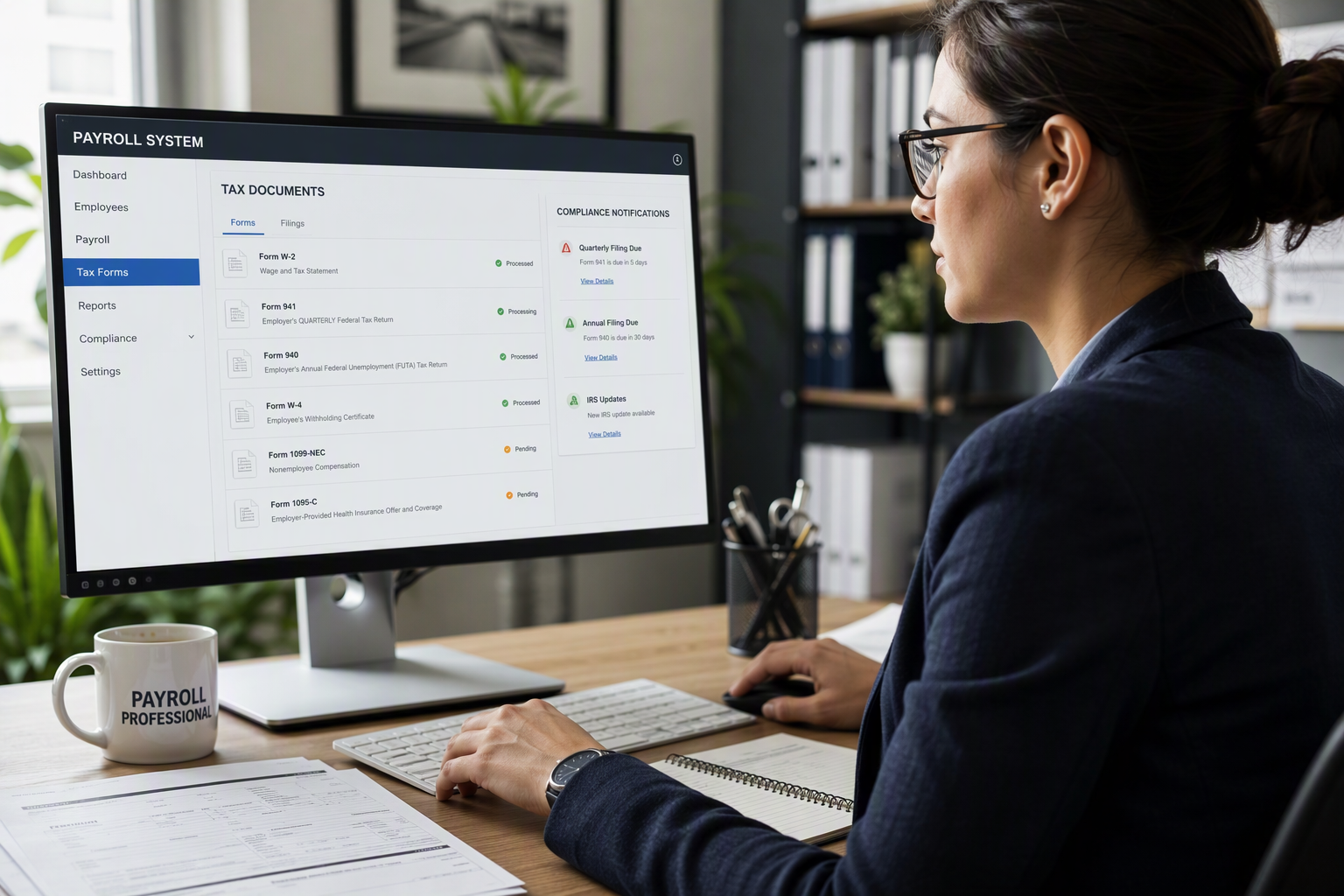
ADP helps reduce tax risk by automating core payroll taxes tasks. Its payroll software calculates tax withholdings, supports tax payments, and handles tax filing for federal, state, and local requirements. That gives you a more consistent payroll management process and helps protect payroll accuracy.
For a payroll service provider in bangladesh, tax compliance is about more than math. ADP also supports communication with government agencies and keeps payroll processing aligned with current rules. To set up payroll with ADP, businesses typically start by providing company and employee information, setting up pay schedules, and choosing tax filing options. ADP then guides users through system configuration to ensure accuracy and compliance. The next sections explain the main parts of that system.
Automatic federal, state, and local tax calculations
ADP payroll uses payroll software to calculate taxes across different jurisdictions. That includes federal, state, and local tax calculations based on employee wages, pay rates, and payroll data entered into the system. This supports payroll accuracy and lowers the chance of mistakes caused by hand entry. If you are looking for ADP payroll login and portal information, you can visit the official ADP website at https://www.adp.com and navigate to the login or portal section. There, you will find secure access to your payroll account and related resources.
For businesses with employees in more than one state, this matters even more. Multi-jurisdiction payroll can be hard to manage manually. ADP helps by applying the right withholding rules during payroll processing so you do not need to track every detail on your own.
Key ways this helps include:
Using payroll data to calculate tax withholdings automatically
Supporting payroll processing for multiple states and localities
Reducing manual work that can hurt payroll accuracy
This is one of the main features offered by ADP payroll services, especially for growing teams.
Real-time tax law updates across jurisdictions
Tax laws change often. That creates pressure for business owners and HR teams, especially if they operate in many states. ADP helps by staying on top of changing tax laws and applying updates across jurisdictions within its payroll management system. This gives businesses of all sizes stronger compliance support.
Instead of asking you to research every rule change, the platform is built to reflect current payroll requirements. That is useful for employers handling different pay rates, work locations, and tax setups. Better updates support better payroll accuracy.
As your company grows, the challenge grows too. ADP is often used by businesses of all sizes because it can support more complex payroll needs without forcing your team to rebuild the whole process. That makes it easier to keep payroll running while rules continue to change.
Tax filing and deposit automation (Full Service tax filing
ADP simplifies tax filing and deposit processes, ensuring businesses meet all tax obligations seamlessly. By automating payroll tax calculations and compliance tasks, business owners can focus on their core operations while resting easy knowing their tax filings, including W-2s and 1099s, are managed effectively. This comprehensive service not only enhances payroll accuracy but also minimizes the risk of errors during tax reporting. With features like direct deposit automation, ADP provides a reliable payroll solution for businesses seeking efficiency and peace of mind.
How ADP Ensures Payroll Accuracy
Payroll accuracy depends on clean inputs, reliable calculations, and fewer manual steps. ADP payroll is designed to automate payroll processing so gross pay, deductions, and payments are handled in a more controlled way. This helps businesses of all sizes reduce avoidable mistakes.
Accuracy also improves when payroll software connects with time tracking, HR systems, and employee records. ADP uses these links, along with review tools and alerts, to catch issues earlier. The next sections show how those controls work in daily payroll operations.
Automated calculations (overtime, deductions, benefits)
ADP payroll software automates common payroll calculations so your team does not have to work everything out by hand. That includes gross pay based on total hours, tax withholdings, benefit deductions, and other payroll items. When data flows through one payroll system, payroll accuracy usually improves.
This also helps when pay rules get more complicated. Different states, overtime needs, and benefit deductions can create errors if your process depends on spreadsheets. ADP applies payroll data consistently, which supports faster payroll processing and more reliable results.
Helpful examples include:
Calculating wages from total hours and pay rates
Processing pretax and post-tax benefit deductions
Handling multiple pay rates and jurisdictions in one payroll software flow
For employers asking how ADP simplifies payroll for small and large businesses, this automation is a big part of the answer.
Error-detection and validation checks before processing
Even good payroll information can contain mistakes. That is why ADP uses error-detection and validation checks before payroll processing is finalized. During testing and demos, the platform showed the ability to preview account debits and flag unusual or missing details. This supports payroll accuracy before money goes out.
Another useful feature is the way the system spots new or unmatched data. If a timesheet includes someone not already mapped in the system, ADP flags that item for review. That helps prevent incomplete payroll data from moving forward without attention.
Built-in AI support also helps identify possible compliance issues and payroll concerns. For business owners, that means fewer surprises. It does not remove the need for review, but it gives your payroll provider a stronger process for checking payroll information before each run. That can save both time and rework.
Integration with time-tracking to reduce manual entry errors
Manual typing creates risk. If your team enters hours by hand, one small mistake can affect pay, tax withholdings, and payroll accuracy. ADP helps reduce that risk by linking payroll software with time-tracking tools and other HR systems. This creates a more connected payroll data flow.
The system can also import timesheets from multiple file formats. Its AI-enhanced import tool maps people, pay, and department data, and it can even recognize items such as unpaid breaks. That makes payroll processing easier for business owners who want fewer spreadsheets and fewer corrections.
Can ADP payroll services integrate with existing HR software? Based on the available information, yes. ADP connects with time and attendance, HR tools, accounting systems, ERPs, and many third-party apps through its marketplace. That broader connection helps reduce duplicate entry and improves payroll accuracy across the business.
Built-In Compliance Features
ADP includes compliance support inside its payroll software instead of treating it like a separate task. That matters when your team must handle tax rules, new hires, payroll records, and HR requirements together. Plans such as HR Pro Payroll add more HR support for growing employers.
This is helpful because regulatory compliance often touches payroll management, human resources, and reporting at the same time. The following sections break down the built-in features that help businesses stay organized and better prepared.
Wage and hour law compliance (FLSA, minimum wage by state)
Wage and hour rules can be hard to manage, especially when your business size changes or you add workers in new states. ADP helps support compliance with employment laws by giving employers payroll management tools that handle different pay rates, multiple jurisdictions, and time-related payroll data in one system.
Minimum wage rules are not the same everywhere. A company with workers in several states may face different wage standards, overtime practices, and reporting expectations. ADP is built for that kind of complexity, which is why it is often used by businesses of all sizes and in regulated industries.
For many employers, the value is simple. A stronger payroll software setup helps reduce missed details that can affect employee wages. While no provider replaces your legal judgment, ADP gives practical compliance support around payroll rules that are easy to overlook when you are growing quickly.
ACA and benefits compliance tracking
Benefits administration often creates extra compliance work. ADP helps by connecting payroll management with benefits tracking, open enrollment tools, and reporting features. For larger employers using ADP Workforce Now, the platform includes benefits analytics, plan tools, and automated compliance tracking that can save time.
Small business users can also add benefits-related services depending on their package. This is useful because benefits data affects payroll software, deductions, employee records, and HR processes. When everything sits in one connected system, there is less back-and-forth between teams.
HR Pro Payroll and higher-tier options also add broader HR support. That can include HR forms, documents, and expert guidance. If you are evaluating payroll services and want more than basic pay runs, this kind of combined payroll and benefits administration support can be a strong reason to consider ADP.
New-hire reporting automation
Hiring brings paperwork fast. New-hire reporting is one of those tasks that can slip if your process is manual. ADP includes new-hire reporting in its payroll services, helping employers send required information to government agencies in a more organized way. That gives you another layer of compliance support.
This feature is useful for both small businesses and larger employers. As new hires enter the payroll system, their payroll data can connect with onboarding and reporting tasks. That reduces duplicate work and helps human resources stay on track during busy hiring periods.
ADP also offers onboarding tools that let employees enter some of their own details, such as direct deposit information. That can reduce admin work and improve accuracy. When reporting and setup happen within one payroll provider platform, the process is usually faster and easier to manage.
Record-keeping and audit trail support
Payroll records matter long after payday. Businesses need to keep payroll information, tax details, and employee pay history in a form that is easy to review. ADP supports digital recordkeeping, document storage, and reporting, which helps with regulatory compliance and internal tracking.
A good audit trail makes payroll management easier because you can see what happened, when it happened, and where the data came from. ADP offers payroll reports covering wage earnings, tax withholdings, benefit deductions, and taxes owed for each employee. Those details are valuable during reviews or questions from leadership.
The platform also allows employers to access reports through desktop and mobile tools. That makes payroll records easier to check without digging through paper files. For a company that wants stronger compliance support, digital records and organized reporting are a practical advantage over manual payroll methods.
How ADP Handles Multi-State and Multi-Country Payroll
ADP is built to support more complex payroll environments, including multi-state and global payroll needs. It handles payroll processing across different jurisdictions, helping businesses manage local rules while keeping payroll accuracy more consistent. That makes it useful for employers planning to expand.
It also supports localized rules, flexible payment methods, and payroll software connections for broader operations. If you are asking whether ADP payroll services are suitable for global companies, the short answer is yes. Here is how that support works.
Localized tax and labor law handling
Running payroll in several states means dealing with different payroll taxes, employment laws, and filing expectations. ADP helps employers handle those differences through payroll management tools built for multi-jurisdiction work. This is one reason many growing companies choose ADP payroll instead of trying to manage separate local processes.
The system supports tax handling at federal, state, and local levels. That matters when workers are spread across locations or when a business expands into new regions. Better local handling helps protect payroll accuracy and lowers the chance of missing location-specific rules.
For businesses of all sizes, this creates a more scalable payroll software process. You do not need to rebuild your payroll solution every time you enter another state. ADP is designed to support expansion, which makes it a strong fit for companies with plans to grow or operate across multiple labor and tax jurisdictions.
Currency and regulatory adjustments for global payroll
ADP also supports global payroll, which is important for companies paying workers in more than one country. The platform is described as helping businesses process payroll faster and easier locally and globally. That gives employers a payroll solution that can support international growth without forcing completely separate systems.
Global operations often need different payment methods and regulatory adjustments. ADP’s platform is built for flexible payroll services, and it also connects with ERPs and other business systems. That helps businesses manage payroll software needs across broader operations.
Useful strengths include:
Support for payroll services that work locally and globally
Flexible payment methods and system integrations for expanding companies
For firms comparing providers, this global reach can be a major difference. It is also relevant for a Bpo Company or any employer supporting distributed teams in different markets.
Security and Data Accuracy Safeguards
Payroll data includes sensitive details such as bank accounts, pay rates, and personal identifiers. ADP protects that information with security features such as encryption-related safeguards, access controls, and user permissions tied to roles. That supports safer payroll management.
Strong compliance support also depends on system reviews, not just passwords. ADP combines security steps with audits, controls, and restricted access so payroll information is easier to protect and monitor. The next sections explain those safeguards more clearly.
Encryption and access controls
Payroll software stores highly sensitive payroll data, so access must be controlled carefully. ADP uses multi-factor authentication, periodic password updates, and role-based permissions so users only see payroll information relevant to their job. That helps reduce unnecessary exposure inside the system.
This matters for both security and payroll accuracy. When fewer people can change key fields, there is less chance of accidental edits to pay rates, direct deposit data, or tax settings. Controlled access supports cleaner payroll management and more confidence in the payroll provider.
Employees and managers still get easy access where appropriate. Through the mobile app and self-service tools, workers can view pay stubs, tax documents, and related details without asking HR for every update. That balance between access and control is one reason many companies trust ADP with payroll information.
Regular system audits and SOC compliance
Reliable payroll management needs ongoing review. ADP supports that with regular system audits and broader compliance-focused controls. While many buyers look first at features, the behind-the-scenes review process is just as important for payroll data quality and trust in a payroll provider.
These checks help confirm that payroll software processes stay consistent as rules, integrations, and workflows change. For employers, that means the system is not standing still. It is being monitored and improved to support compliance support and daily accuracy needs.
ADP also brings extensive experience to this area. With decades in payroll services and human capital management, it is built to support organizations that need stable controls as they scale. If your business wants a provider that combines automation with structured oversight, these audit-focused safeguards are part of the value.
ADP vs Manual Payroll vs Other Providers (optional comparison table)
If you compare ADP with manual payroll, the biggest difference is automation. Manual work often means more spreadsheets, more repeated entry, and more room for errors in tax filing and payroll processing. ADP payroll software adds compliance support, direct deposit options, integrations, and mobile access. Compared with some other providers, ADP also stands out for scalability across small business payroll, midsize teams, and larger employers. Pricing options are personalized, though one small business plan starts at $79 plus $4 per employee per month.
Option | Payroll processing | Compliance support | Best fit |
|---|---|---|---|
Manual payroll | Hand calculations, filing taxes, record storage | Low, depends on your team | Very small teams with simple needs |
ADP | Automated payroll services, tax filing, HR tools, mobile app | Strong federal, state, local support | Businesses of all sizes |
Other providers | Varies by payroll provider and plan | Varies | Cost-focused or niche buyers |
Conclusion
In conclusion, leveraging ADP for payroll services brings significant advantages in terms of compliance and accuracy. With features like automatic tax calculations, real-time updates on tax laws, and comprehensive error checks, businesses can rest assured that their payroll processes are both efficient and precise. Additionally, ADP’s built-in compliance features not only help meet regulatory standards but also reduce the risk of costly errors.
As companies navigate the complexities of payroll across various jurisdictions, the support ADP offers ensures that they remain compliant without sacrificing accuracy. If you are eager to enhance your payroll management and ensure compliance, consider reaching out for a free consultation with our experts today.
Frequently Asked Questions
Is ADP payroll 100% compliant with state laws?
ADP offers strong compliance support, automatic updates, and multi-state payroll services, but no payroll provider can promise perfect compliance in every situation without accurate employer input. Its tools help improve payroll accuracy and keep up with tax laws, yet your business must still provide correct payroll data.
How does ADP handle payroll tax filing?
ADP supports tax filing by automating tax calculations, withholding the right amounts, and helping send payments to the proper agencies. Its payroll services are built to improve payroll accuracy and provide compliance support for federal, state, and local payroll tax requirements within one system.
What happens if ADP makes a payroll error?
Based on the provided information, if ADP makes an error when calculating payroll liabilities or filing taxes, it will pay related fines or penalties. That gives business owners extra confidence in payroll management and shows how this payroll provider backs its payroll accuracy and compliance support.
Does ADP support multi-state payroll compliance?
Yes. ADP supports multi-state payroll through automated tax calculations, filing support, and tools designed for multiple jurisdictions. Its payroll services help employers manage different state and local rules, making the payroll provider a practical option for companies that need stronger regulatory compliance across locations.
What specific compliance requirements does ADP help businesses meet regarding payroll services?
ADP helps with payroll tax filing, new-hire reporting, wage and hour concerns, payroll records, and benefits-related tracking. This compliance support improves payroll accuracy and gives employers a payroll provider that addresses several regulatory compliance needs tied directly to payroll services and workforce administration.
How does ADP ensure the accuracy of payroll processing for different states and tax jurisdictions?
ADP improves payroll accuracy by automating tax calculations for federal, state, and local rules and by updating payroll software for changing requirements. For payroll processing across tax jurisdictions, this payroll provider also uses integrations, alerts, and review tools to help catch mismatched or incomplete data.
What types of reports does ADP provide to help businesses maintain payroll compliance?
ADP provides payroll reports such as payroll summary details, tax withholdings, benefit deductions, and taxes owed for each employee. These payroll records support payroll management and compliance support by giving employers a clearer view of obligations, changes, and documentation stored within the payroll provider system.
How can small businesses benefit from using ADP for their payroll services compared to handling it in-house?
Small businesses can save time and reduce manual mistakes by using ADP payroll services instead of running payroll in-house. The payroll software automates calculations, tax filing, and direct deposit, while the payroll provider also offers compliance support that many small teams may not have internally.
What are the key features of ADP's payroll services that support compliance?
Key features include automatic tax calculations, tax filing support, new-hire reporting, payroll records, benefits-related tracking, and alerts tied to changing requirements. Together, these payroll services give employers a payroll provider with payroll software designed to strengthen compliance support and day-to-day regulatory compliance.
How does ADP ensure the accuracy of payroll calculations for different states and localities?
ADP uses payroll software to automate payroll calculations across federal, state, and local jurisdictions. That supports payroll accuracy during payroll processing by applying the right rules to wages, deductions, and taxes. This payroll provider also reduces hand entry through integrations and validation checks before submission.
What types of reporting does ADP offer to help businesses maintain compliance with tax regulations?
ADP offers reporting on wage earnings, tax withholdings, benefit deductions, and taxes owed. These payroll records support compliance support by helping employers review obligations tied to tax regulations. As a payroll provider, ADP includes these payroll services within a broader reporting and recordkeeping system.
How can businesses benefit from using ADP's payroll services in terms of time-saving and reducing errors?
ADP saves time by automating payroll services such as calculations, filings, and employee payments. Its payroll software also reduces repeated entry through integrations and self-service tools. For business owners, that means better payroll accuracy, fewer manual errors, and less time spent fixing payroll problems each cycle.
What are the key features of ADP's payroll services that help ensure compliance with tax regulations?
ADP helps with tax regulations through automatic tax calculations, filing support, tax payments, and updates tied to changing rules. Its payroll software also supports reporting and communication with agencies. These payroll services give employers compliance support from a payroll provider built for ongoing tax responsibilities.
How does ADP handle payroll tax calculations and filings to maintain accuracy?
ADP maintains payroll accuracy by using payroll software to automate tax calculations and tax filing across federal, state, and local levels. This payroll provider applies current rules to payroll services and helps send the correct amounts to agencies, reducing manual work that can create costly errors.
What steps does ADP take to stay updated on changes in labor laws and compliance requirements?
ADP stays current by updating its payroll software to reflect changing tax laws and broader compliance requirements across jurisdictions. Combined with expert support and compliance-focused tools, these payroll services help employers strengthen regulatory compliance while relying on a payroll provider with extensive experience.
Can ADP's payroll services integrate with other HR tools to enhance overall compliance and reporting?
Yes. ADP payroll services connect with HR tools, time tracking, accounting platforms, ERPs, and marketplace apps. These integrations help the payroll provider reduce duplicate entry, improve reporting, and strengthen compliance support by keeping payroll software and related employee data connected across systems.
What are the key features of ADP's payroll services that enhance compliance?
ADP enhances compliance through automated taxes, new-hire reporting, recordkeeping, benefits-related tracking, alerts, and connected HR features. For business owners, these payroll services make it easier to manage obligations inside one payroll software environment, backed by a payroll provider that supports complex payroll workflows.
How does ADP ensure accuracy in payroll processing?
ADP improves payroll accuracy with automation, built-in checks, preview tools, timesheet imports, and integrated payroll services. Its payroll software reduces hand entry and flags unusual data before processing. As a payroll provider, ADP also supports compliance support that helps payroll stay aligned with current requirements.
What steps does ADP take to stay updated on changing tax laws and regulations?
ADP tracks changing tax laws and updates its payroll services across jurisdictions to reflect current rules. This gives employers stronger compliance support and helps the payroll provider maintain regulatory compliance in tax calculations, filing steps, and related payroll processes for businesses operating in multiple locations.
Can small businesses benefit from using ADP for payroll services, and if so, how?
Yes. Small businesses can benefit from ADP payroll services through automated payroll management, tax filing, direct deposit, employee self-service, and compliance support. This payroll provider gives small teams payroll software that is easier to run than manual payroll and can scale as the business grows.
Related Article:
- Top 7 Payroll Outsourcing Companies in Bangladesh Today
- Importance of Accurate Payroll Processing for Your Business
- How To Choose The Best Payroll Funding Company For Your Business
- How to Save On Your Taxes with a Tax Consultancy
- The Science of Payroll – Why Its So Important in Bangladesh
- Top Payroll Management Services for Small Businesses


0 Comments
Post a Comment